2026-05-08
Content
Interlock weft knitted fabric is produced using a specialized circular knitting process that employs two sets of needles working in alternating sequence. Unlike a standard single jersey construction — where loops are formed on one needle bed and the fabric has a distinct face and reverse side — interlock knitting interlocks two ribbed structures back to back, merging them into a single unified cloth. The result is a fabric where both faces present the same smooth appearance, which is the defining characteristic of the double-sided construction method.
This structural difference has direct consequences for the fabric's physical properties. Because each loop on the face is anchored to a corresponding loop on the reverse, the fabric resists the curling and rolling at cut edges that is common in single jersey. The interlocked structure also distributes tension more evenly across the fabric plane, which contributes to greater dimensional stability during wear and laundering. For manufacturers and product developers working with knit fabrics, this stability is one of the primary reasons interlock is specified over single jersey when consistent fit and shape retention matter.
The weight of interlock weft knitted fabric is typically higher than comparable single jersey constructions in the same yarn count, reflecting the doubled loop density. This additional substance gives the fabric a more confident hand and a drape that sits closer to woven fabric than most knit alternatives, making it suitable for garments that need to project structure and quality while retaining the comfort and stretch that knit constructions inherently provide.
The double-sided construction of interlock fabric creates a smooth, even surface on both the face and reverse of the cloth. This symmetry is not merely aesthetic. In practical production terms, it means that garments cut from interlock fabric can be used with either side facing outward without a visible quality difference, which gives pattern makers and product designers additional flexibility during garment construction. Reversible garments, unlined knitwear pieces, and exposed seam designs all benefit from this characteristic.
From a surface quality perspective, the double sided knit fabric structure produces a texture that accepts dyes, pigment prints, and surface treatments more uniformly than textured or looped knit constructions. Because both faces present the same level of loop density and the same degree of surface smoothness, the dye uptake is consistent across the full cloth width, and screen printing or digital print applications achieve sharp definition without the colour bleeding that can occur on fabrics with an uneven surface pile or loop structure.
The interlocked loop arrangement also contributes to the fabric's recovery properties. When the fabric is stretched — whether in the width, the length, or on the bias — the two interlocked layers work together to return the fabric toward its original dimensions. This recovery behaviour is more reliable than that of single-layer knit fabrics, where the single needle bed construction provides less resistance to permanent deformation under repeated stress. For garments that will be worn, washed, and worn again across many cycles, the interlock structure's recovery performance translates directly into longer useful life and more consistent fit over time.
Single jersey fabric stretches readily in the crosswise direction and has moderate stretch in the lengthwise direction, but it has limited recovery under sustained load. This is acceptable for garments where a relaxed, draping silhouette is the design intent, but it creates problems for fitted styles or performance garments that need to maintain a defined shape across extended wear periods. Interlock weft knitted fabric addresses this limitation directly through its construction.
The interlock construction provides stretch in both directions — width and length — but with a firmer hand and a more controlled extension than single jersey. The fabric stretches to accommodate movement and body contour, but the resistance to extension is higher, meaning the fabric returns more completely to its resting dimensions when the stretch force is removed. This makes interlock particularly well suited to garments where fit is part of the product's value proposition: polo shirts, fitted dresses, performance base layers, and structured loungewear all benefit from a fabric that conforms without distorting.
| Property | Interlock Weft Knitted Fabric | Single Jersey Fabric |
|---|---|---|
| Surface appearance | Smooth on both sides | Smooth face, looped reverse |
| Fabric weight | Heavier, more substantial | Lighter, finer |
| Edge curling | Minimal | Pronounced |
| Shape retention | High | Moderate |
| Stretch recovery | Strong | Moderate |
| Reversibility | Yes | No |
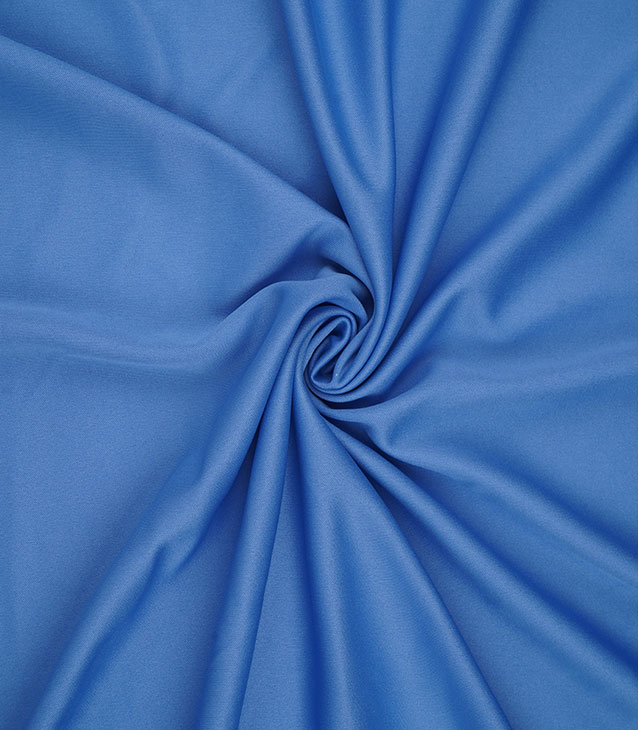
One of the functional properties that makes interlock weft knitted fabric relevant to performance and comfort-driven applications is its moisture management behaviour. Despite the fabric's greater thickness compared to single jersey, the interlock construction maintains an open enough loop structure to allow air circulation through the fabric layer. This breathability prevents the heat buildup that can occur with tightly woven or densely constructed fabrics, keeping the microclimate between the fabric and the skin within a comfortable range during moderate activity.
When produced in synthetic fibres such as polyester or polyester-spandex blends, interlock fabric exhibits effective moisture-wicking behaviour, drawing perspiration away from the skin surface and distributing it across a larger fabric area where it can evaporate more quickly. This property makes the fabric a practical choice for activewear, base layers, and performance loungewear — categories where thermal regulation and moisture control are functional requirements rather than optional features.
Cotton interlock presents a different moisture profile. Natural cotton fibres absorb moisture rather than wicking it, which creates a soft, cool feel against the skin that is well suited to casual wear, sleepwear, and baby garments. The interlock construction in cotton delivers this absorbency within a fabric that holds its shape and resists distortion through repeated washing — a combination that single jersey cotton cannot match with the same consistency. For product categories where comfort against the skin and durability through laundering are both priorities, cotton interlock weft knitted fabric is a consistently reliable specification.
The combination of smooth surface, dimensional stability, stretch recovery, and moisture management makes interlock weft knitted fabric applicable across a wider range of end uses than most single-construction knit fabrics. Understanding which applications benefit most from the double-sided construction helps procurement teams and product developers specify the right fabric version for each project.
Polyester or polyester-spandex interlock is widely used for athletic t-shirts, training tops, fitted leggings, and sports base layers. The fabric's controlled stretch allows full range of motion, while the recovery properties ensure the garment returns to its intended silhouette between uses. Moisture-wicking performance keeps the wearer comfortable during sustained activity, and the smooth surface minimises friction against the skin during repetitive movement.
The luxurious hand of interlock fabric — particularly in cotton or cotton-modal blends — makes it a preferred choice for premium loungewear, pyjamas, and relaxed-fit casualwear. The fabric's weight and drape give garments a more considered, elevated appearance than standard jersey, while the softness and flexibility maintain the relaxed comfort that loungewear consumers expect. Shape retention through repeated washing is a particular advantage in this category, where garments are laundered frequently.
The double sided knit fabric construction makes interlock suitable for reversible home textile applications including cushion covers, lightweight blankets, and fitted bedding. In baby product categories — bodysuits, sleep sacks, and soft furnishings — cotton interlock is specified for its combination of gentleness against sensitive skin, durability through intensive laundering, and resistance to edge distortion during cutting and finishing.
The even, consistent surface of interlock weft knitted fabric provides an excellent base for screen printing, digital printing, and embroidery. The absence of surface texture variation means print registration is more accurate, colour saturation is more uniform, and fine detail reproduction is cleaner than on textured knit alternatives. Fashion brands using print as a core design element frequently specify interlock for this reason.
Interlock weft knitted fabric can be produced in a wide range of fibre compositions, and the choice of fibre significantly affects the performance profile of the finished cloth. Understanding the principal options allows buyers and product developers to align fabric specification with end-use requirements from the outset.
Across all fibre compositions, the double-sided construction of interlock weft knitted fabric ensures that the structural benefits — shape retention, surface consistency, edge stability, and stretch recovery — remain consistent. The fibre choice layered on top of this construction determines the specific comfort, performance, and sustainability characteristics that differentiate one interlock specification from another, allowing the fabric to serve a genuinely broad range of end uses within a single construction category.

27th floor , South building, 1358# Mingzhu North Road, Changxing County Zhejiang province, China

+86-13665757726

+86-0572-6228207

+86-0572-6228207


Copyright © ZHEJIANG QIDA TEXTILE CO., LTD. Rights Reserved. Activewear Fabric Suppliers Sportswear Fabric Manufacturers



 English
 中文简体
中文简体