2026-07-15
Content
Interlock fabric isn't locked into one season. What determines whether a piece feels right in July or December is the fabric's weight in GSM (grams per square meter), not the knit structure itself. Lightweight interlock in the 120–180 GSM range, made from cotton or bamboo, breathes well enough for warm-weather basics. Heavier interlock at 220–300+ GSM traps air between its two knit layers and performs closer to a light sweater — better suited to cool or cold conditions.
So the honest answer is: both, depending on how it's made. The double-knit construction that defines interlock — two layers of interlocking loops instead of one — is what gives the fabric its range in the first place.
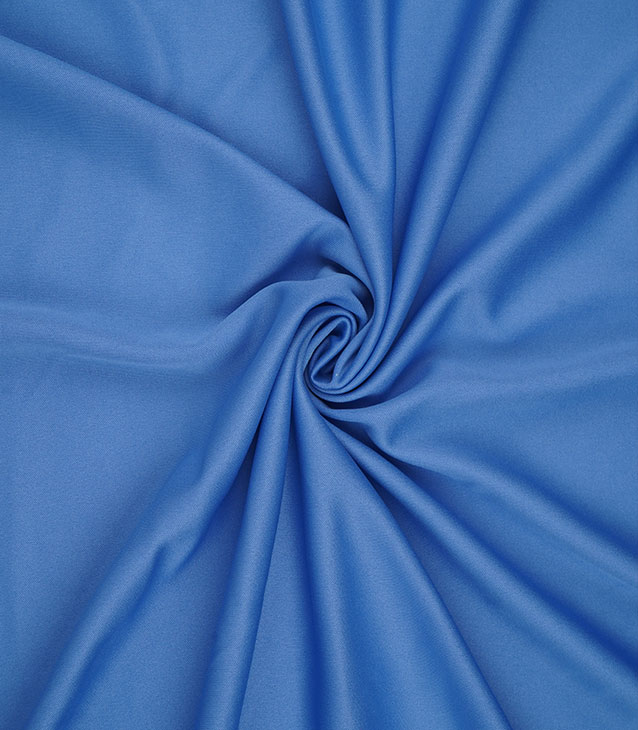
Interlock is built on a circular knitting machine using two sets of needles instead of one, which produces a fabric that's identical and smooth on both sides. That two-layer construction naturally holds a thin cushion of air between the layers. A 180 GSM interlock can feel as warm as a 220 GSM single-jersey fabric, simply because of that trapped air — which is exactly why weight matters more than the knit type when deciding on seasonality.
At low GSM, that air layer is thin enough that heat escapes easily and the fabric stays breathable. At high GSM, the same structure holds heat in, which is what makes heavier interlock a common choice for base layers, thermal underwear, and cold-weather loungewear.
Fiber content changes the equation too. Cotton and bamboo interlock breathe and wick moisture, which keeps lightweight versions comfortable in heat. Brushed cotton interlock — where the inner face is lightly raised — adds warmth without adding much weight, making it a common pick for winter tees and pajamas. The table below breaks down what to look for depending on the season.
| Season | GSM Range | Best Fiber Choice | Typical Use |
|---|---|---|---|
| Summer | 120–180 GSM | Cotton, bamboo | T-shirts, baby wear, loungewear |
| Spring/Fall | 180–220 GSM | Cotton-poly blend, modal | Long-sleeve tees, polos, dresses |
| Winter | 220–300+ GSM | Brushed cotton, wool blend | Thermal underwear, pajamas, outerwear |
Compared to single jersey — the lighter, single-layer knit used in most basic t-shirts — interlock holds its shape better and resists the curling edges that make jersey harder to sew and wear. That stability is why interlock shows up in baby clothing, polo shirts, and underwear across every season: parents and manufacturers value the durability as much as the temperature performance.
Start with the end use, not the fabric name. A baby onesie and a winter thermal top are both "interlock," but they need almost opposite specs.
Get the weight and fiber right for the season, and interlock delivers on both ends of the temperature range — which is exactly why it remains a staple across baby wear, activewear, and everyday basics year-round.

27th floor , South building, 1358# Mingzhu North Road, Changxing County Zhejiang province, China

+86-13665757726

+86-0572-6228207

+86-0572-6228207


Copyright © ZHEJIANG QIDA TEXTILE CO., LTD. Rights Reserved. Activewear Fabric Suppliers Sportswear Fabric Manufacturers



 English
 中文简体
中文简体