Home / News / Industry news / Biodegradable Fabric: A Mill's Guide to Fibers, Tests and Real Trade-Offs
2026-10-08
Biodegradable fabric is one of those phrases that sounds simple until you actually have to buy it. Buyers ask for it, brands print it on a hangtag, and somewhere in the middle a fabric mill has to decide whether the material can honestly carry the word. We have been knitting and finishing fabric since 1998, and in the past few years the question has moved from an occasional email to a regular line in the enquiries that reach our inbox.
This guide is roughly what we tell those buyers. It covers what biodegradation really measures, which fibers break down and under what conditions, why a small percentage of elastane can quietly spoil an otherwise good story, and how to check a claim before it ever reaches a label.
Content
Biodegradation is a biological process, not a property that a fiber carries around with it. Microorganisms consume the material and convert its carbon into carbon dioxide, water and biomass. Laboratories measure this by capturing the CO2 that evolves, which is why any credible biodegradation result arrives with three things attached: the test method, the conditions and the timeframe.
Take those three away and the word means very little. A cellulose fabric that disappears in garden soil within two months may sit unchanged for decades in a sealed landfill, where there is no oxygen, no moisture and very little microbial activity. A fabric that passes an industrial composting test at around 58 °C is not automatically suitable for a home compost heap, and marine biodegradation is a different standard again.
Keeping these apart matters, because a shopper reads them as one thing and a compliance officer does not.
The base fiber sets the ceiling for everything that follows. This is how the main families behave once a garment or a roll reaches the end of its useful life.
| Fiber family | Origin | End-of-life behavior | What to watch |
|---|---|---|---|
| Cotton, linen, hemp, jute | Plant cellulose | Readily attacked by soil microorganisms; untreated cotton can vanish in weeks to months | Dye chemistry and finishing matter more than the fiber itself |
| Viscose, modal, lyocell | Regenerated cellulose from wood pulp | Same cellulose backbone, so it biodegrades readily under the right conditions | Solvent recovery and process route vary widely between producers |
| Wool and silk | Animal protein | Biodegrade, generally more slowly than cellulose; wool releases nitrogen into soil | Synthetic blends and moth-proofing treatments complicate the picture |
| PLA | Bio-based polyester from fermented plant starch | Industrially compostable, but needs sustained heat and humidity; slow at home | Keep it out of PET recycling streams |
| PBAT and PBS | Biodegradable synthetic polyesters | Engineered to biodegrade in soil and compost; common in nonwovens and films | Feedstock is still fossil-based in many cases |
| Polyester, nylon, acrylic, elastane | Fossil-based polymers | Not biodegradable on any realistic timescale | Even a few percent of elastane can keep a knit out of a composting stream |
The practical lesson is that the fiber choice decides whether a biodegradability conversation is possible at all. Everything that happens afterwards either protects that property or quietly destroys it.
Very few fabrics are a single fiber. A knit sold as cotton may contain 5% elastane for recovery, a polyester sewing thread, a printed panel with a binder, and a softener applied during finishing. Every one of those adds something that the microbes have to deal with, and some of them simply will not be dealt with at all.
Elastane is the usual culprit. Even at 3 to 5 percent it can take a knit out of a composting stream, because the polyurethane core does not break down on the same timescale as the cellulose around it. Water-repellent chemistry is a second common blocker, which is one reason we watch the shift toward fluorine-free water repellency so closely: a finish that keeps rain out can also slow microbial attack if it is not chosen with end of life in mind.
Dyes, pigments, binders and antistatic agents all sit in the same bucket. When a buyer asks us whether a fabric is biodegradable, the honest first answer is usually another question: which version of the fabric, made with which yarn, finished in which way?
Not every biodegradable fiber behaves like the polyester most machines are set up for. PLA is heat sensitive and can lose strength if drying temperatures run too high. Regenerated cellulose yarns tend to be weaker when wet and less elastic than the polyester they replace. On a warp knitting line that means rethinking tension, run-in and needle selection; in the finishing house it means lower temperatures and gentler chemistry from start to finish.
Structure helps more than people expect. Open constructions knit efficiently, use less material, dry quickly and leave less polymer mass to break down in the first place, which makes a straightforward knitted mesh one of the friendliest places to begin a bio-based program.
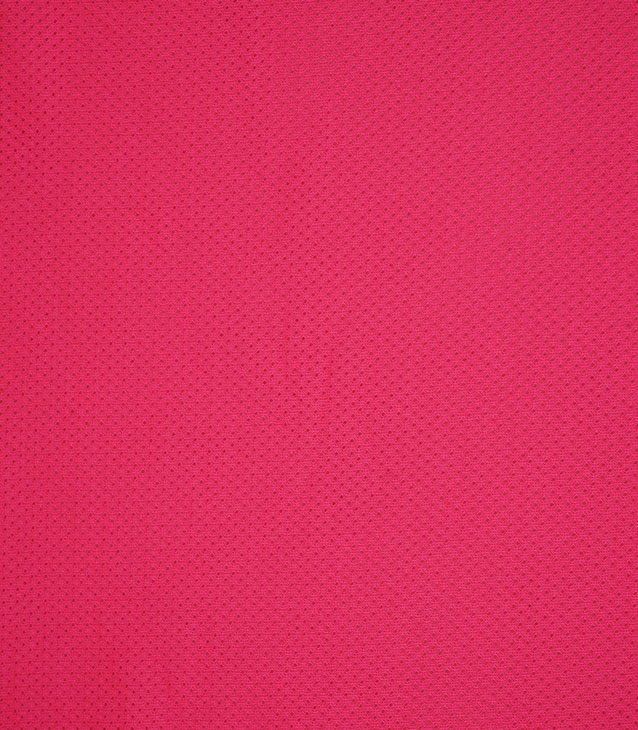 Warp Knitted Polyester Mesh FabricBreathable, durable polyester mesh with uniform openings; its open construction makes it a practical starting point for sample and pilot trials.View Product →
Denser structures take more trial work before the hand feel, the shrinkage and the recovery land where a brand wants them. That work is normal, it is just slower, and it is worth doing on samples and pilot lots rather than on a first bulk order.
We are a fabric factory, which puts us in the middle of the chain. We buy yarn, we knit it, and we finish it with partners we know well. We have been at this since 1998, and you can read more about how the plant is organised on our factory profile. Across 62 Karl Mayer warp knitting machines, 100 circular knitting machines, two spunbond nonwoven lines and one meltblown line, we run more than 30,000 tonnes of fabric a year.
What we cannot do is certify a fabric as biodegradable on your behalf. That is a test result, not an opinion, and it depends on the construction, the trims and the disposal route you are designing for. What we can do is knit and finish with the fibers you specify, hand over specification sheets and construction details, arrange third-party testing when you need it, and tell you plainly when a request will not survive a lab report. Our quality system links pay to product quality, and inspection can be carried out in-house or by a third party you appoint.
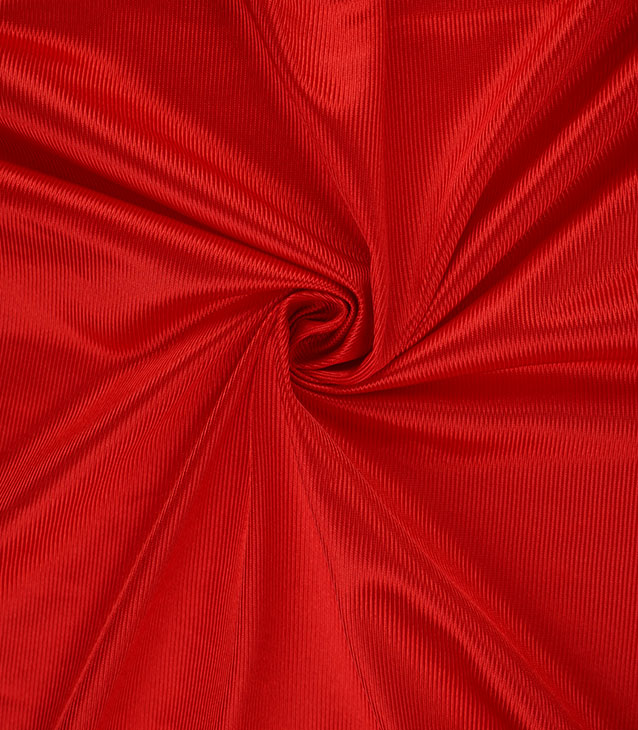 Warp Knitted Fabric Collection for Apparel and Technical TextilesExplore varied warp knit options, from mesh and fleece to swimwear and print bases, with sourcing guidance on stretch, breathability, and finishing.View Product →
That combination of integrated production and open, honest technical conversation is the part of the job we are most comfortable with.
If you are sourcing a biodegradable fabric, a short checklist saves a great deal of trouble later.
Biodegradability is a poor fit for a product designed to last a decade, and a very good fit for products with a short and predictable life.
 Interlock Weft Knitted Fabric for Comfort and DurabilitySoft, stretchy interlock weft knit with a smooth double-sided surface; durable, breathable and moisture-wicking for activewear, loungewear and long-lasting textile projects.View Product →
Our nonwoven side is where we watch this space most closely. The spunbond and meltblown capacity we built for filtration and protective markets is the natural home for the bio-based polymer grades now appearing in nonwoven, and it is where the practical questions about strength, shelf life and certification tend to get answered first.
Biodegradable fabric is not really a marketing angle. It is an engineering brief with a deadline attached, and it is best treated that way: pick the fiber deliberately, keep the construction simple, document the full recipe and test the article as sold rather than the yarn you started with.
If you are working through a project like that, we are happy to talk it through, sample a few constructions and tell you where we think the risks are. That conversation usually costs less than a failed bulk order, and it is the part of the job we genuinely enjoy.

27th floor , South building, 1358# Mingzhu North Road, Changxing County Zhejiang province, China

+86-13665757726

+86-0572-6228207

+86-0572-6228207


Copyright © ZHEJIANG QIDA TEXTILE CO., LTD. Rights Reserved. Activewear Fabric Suppliers Sportswear Fabric Manufacturers



 English
 中文简体
中文简体