Home / News / Industry news / Digital Printing on Textiles: A Practical Mill Guide for Fabric Sourcing Teams

2026-11-16
Digital printing on textiles has changed how many buyers approach pattern, color and minimum order quantity. At our mill in Changxing, we still treat printed fabric as a fabric first and a print second. The ink matters. So do the base cloth, the pretreatment, the fixation step and the final finish. When those pieces work together, digital printing gives fashion, activewear, swimwear and home textile teams a practical way to test ideas without committing to a full rotary screen run.
This guide comes from the mill floor rather than the showroom. It explains what the process involves, where it earns its place, and what to ask before approving a strike-off.
Content
In simple terms, digital printing on textiles uses inkjet printheads to place color onto a prepared fabric according to a digital file. There is no screen for each color and no paste reservoir. That sounds simple, but textile printing is not the same as printing on paper. A fabric moves, stretches, absorbs ink differently across its width, and must still pass washing, rubbing and light tests after the print is fixed.
That is why the base cloth is not a neutral detail. A tight warp knit, an interlock, a mesh or a swimwear fabric each needs its own print recipe. We consider stability, shrinkage, handfeel and stretch recovery before we talk about artwork. You can see the range of equipment behind this work on our factory capabilities page.
Buyers often see a printed roll and assume the job starts at the printer. In practice, a reliable result depends on a sequence:
Digital printing is not automatically cheaper or better. It is a tool with a different cost curve. Digital wins when a design has many colors, fine detail, frequent changes or a short run. Rotary screen wins when the repeat is simple, the order is long and the same design will run for weeks. The table below gives the practical view we use in conversations with buyers.
| Factor | Digital inkjet | Rotary screen |
|---|---|---|
| Minimum run | Short runs and samples are practical. | Screens and setup favor larger runs. |
| Design changes | A file change can replace screens. | New screens are needed for new colors. |
| Complex detail | Strong for gradients and fine motifs. | Strong for bold flats and simple repeats. |
| Speed | Lower per meter on many short jobs. | Higher on long, repeat orders. |
| Setup waste | Less screen and paste waste. | More screen and paste preparation. |
The cost question should include fabric yield, ink coverage, pretreatment, fixation, washing, inspection and the reject allowance. A low print price per meter can disappear if the fabric shrinks, the handfeel changes or the color needs re-runs. Ask for a quote that names the fabric specification, print width, repeat, ink type and test standard.
The printer is visible, but ink and fiber chemistry decide the result. Reactive inks are common for cotton and other cellulosic fabrics. Acid inks suit silk, nylon and some wool. Disperse inks are used for polyester, often through sublimation. Pigment inks can be simpler on blends, but they sit on the surface and may affect handfeel and rubbing fastness. Each route needs its own pretreatment and washing regime.
We test before we promise. A print that looks correct on paper can crack on a stretch knit, bleed at the edge of a fine line or change color after washing. Crocking, wash fastness, light fastness, shrinkage and stretch recovery all belong in the approval conversation.
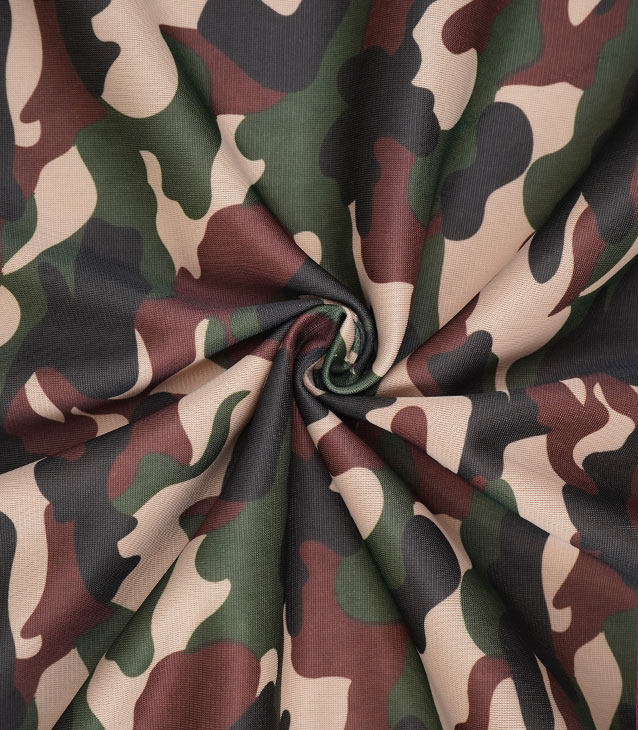
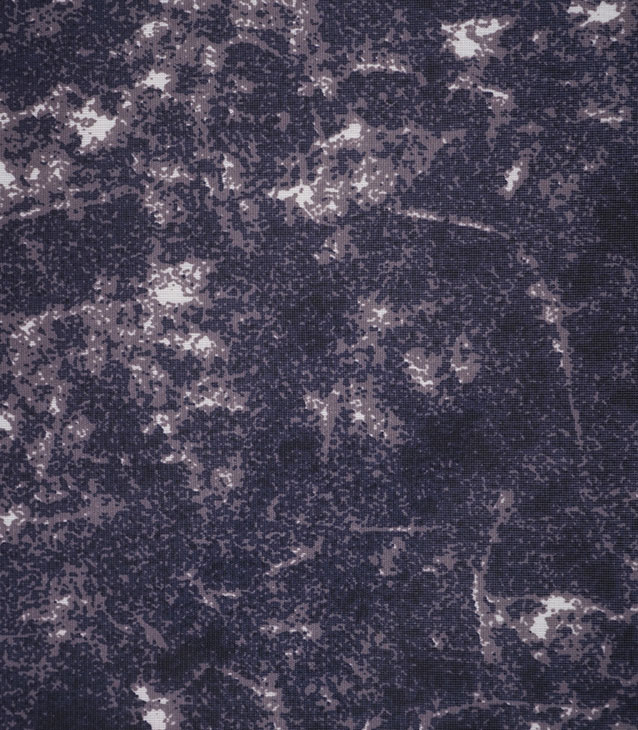 Printed Warp-Knitted Polyester Fabric by QidaPrinted warp-knitted polyester offers a smooth, stable surface for sharp patterns, plus lightweight softness and wrinkle resistance; available in rolls with custom options.View Product →
Digital printing earns its place when speed to market matters. Fashion teams use it for limited colorways, placement prints and seasonal stories. Activewear brands use it for small runs, panel prints and quick sampling across base cloths. Swimwear benefits from complex motifs and matching linings, provided the ink and washing route are right for elastane-rich fabrics. Home textiles use digital printing for cushions, panels and sample collections that would be expensive to screen.
For sportswear and activewear, the base cloth often matters as much as the print. Our guide to common sportswear fabrics explains how mesh, interlock and stretch knits behave in production. For swimwear, we often start with a base cloth that can carry color without losing recovery.
 Warp-Knitted Swimsuit Cloth for Performance SwimwearWarp-knitted swimwear fabric with stretch and recovery, a smooth soft hand, and chlorine- and salt-water suitability; supplied in rolls with customization available.View Product →
Digital printing is also useful for protective outer fabrics where a printed design or brand mark is needed, but it should not be confused with the barrier performance of the fabric itself. The print is one layer of the specification, not a substitute for the required protective standard.
It is fair to say that digital printing has limits. Production speed per meter is usually lower than rotary screen on long runs. Ink and pretreatment add cost. Dark colors and heavy coverage use more ink and can change handfeel. Washing and fixation cannot be skipped, and poor pretreatment will show up later as wicking, patchiness or poor fastness.
Digital is also not automatically a low-impact choice. It can reduce screen and paste waste on short runs, but water use in pretreatment and washing, energy for fixation, ink chemistry and fabric waste still count. Ask for the full process, not just the printer. A responsible supplier should be able to explain where the water, energy and waste sit in the route.
Most problems are easier to prevent than to fix. Before a strike-off is approved, we ask buyers to confirm:
A clear checklist protects both sides. It also makes the first bulk order less of a guess.
We have been making fabric since 1998, and our work covers warp knitting, weft knitting and nonwoven production. That range matters for printing because the base cloth is where most print problems begin. Our team supports custom fabric development, from choosing the right construction to matching the finish to the end use. We produce more than 30,000 tons of fabric a year and serve customers in markets including India, Brazil, Mexico, Italy, Russia and Poland.
We do not treat digital printing as a standalone service. We treat it as one stage in a fabric development conversation: what will the print sit on, how will it feel, how will it wear, and what does the buyer need to see before saying yes? If you are planning a printed textile program, start with the fabric and the test standard. The artwork can follow.

27th floor , South building, 1358# Mingzhu North Road, Changxing County Zhejiang province, China

+86-13665757726

+86-0572-6228207

+86-0572-6228207


Copyright © ZHEJIANG QIDA TEXTILE CO., LTD. Rights Reserved. Activewear Fabric Suppliers Sportswear Fabric Manufacturers


 English
 中文简体