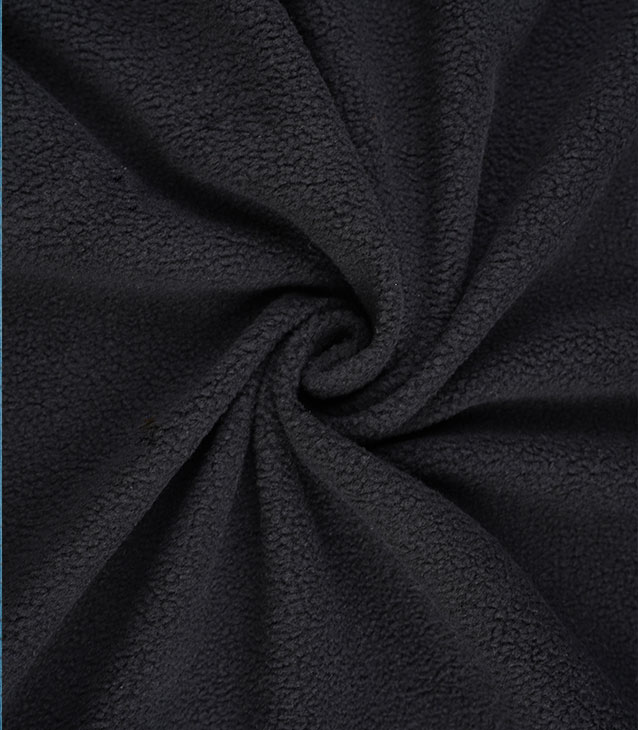
Home / News / Industry news / What Is Warp Knitted Polar Fleece Fabric? Construction & Properties Explained
2026-07-21
Content
Most buyers describe polar fleece by how it feels — thick, plush, warm. But "warp knitted" in the name refers to something more specific and more consequential for sourcing: how the fabric is built on the machine. In warp knitting, each yarn runs lengthwise along the fabric and loops simultaneously with its neighboring yarns across the width, creating a diagonal, interlocking grid rather than a single continuous row of loops. This is fundamentally different from weft-knitted fleece, where each course of loops is formed one row at a time using a single continuous yarn — the same basic structure used in a knitted sweater. The distinction matters because it changes how the fabric behaves under stress, in the wash, and over years of use, not just how it feels off the roll.
A weft-knitted fabric can run or ladder if a single loop breaks, because the entire structure depends on one yarn path per row. Warp knitting avoids this failure mode almost entirely: because each wale is formed from its own yarn interlocking diagonally with its neighbors, damage to one loop does not propagate through the fabric. For a fleece fabric that will be cut, sewn, brushed, and washed repeatedly over the life of a garment or blanket, this run-resistance is not a minor technical detail — it is the reason warp knitted polar fleece holds its shape and surface integrity far longer than comparable weft-knitted alternatives.
The diagonal loop structure also gives warp knitted fleece better dimensional stability. It resists the curling at cut edges that plagues single-jersey weft knits, which in practical terms means less waste at the cutting table and fewer distorted panels in finished goods.
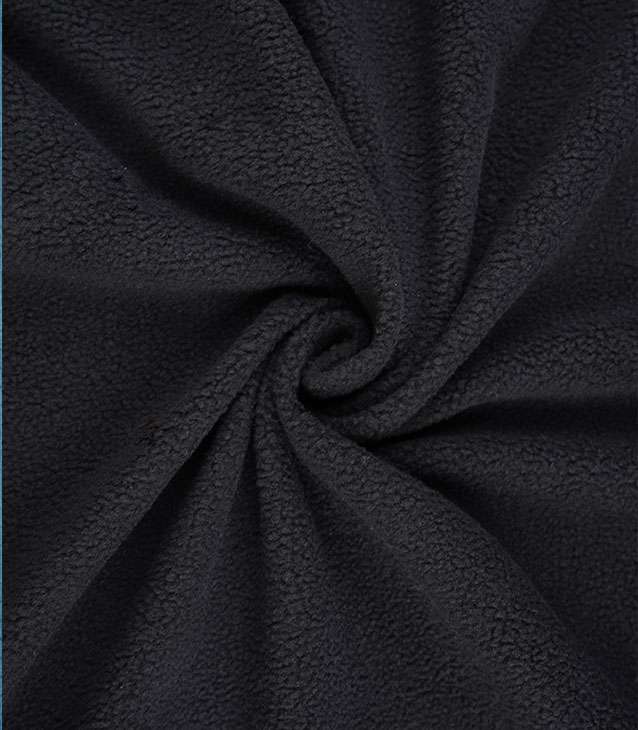
The soft, raised texture associated with polar fleece does not come from the yarn itself — it comes from a mechanical finishing process applied after knitting. The base fabric is knitted with a looped or sliver-pile structure, then run through brushing rollers fitted with fine wire teeth that lift and separate the surface fibers, raising the characteristic nap. This is followed by shearing, which trims the raised fibers to a uniform, even height across the entire fabric width. The combination of brushing and shearing is what produces the dense, velvety hand-feel and the fabric's insulating air pockets, which trap warm air close to the body far more effectively than a flat-surfaced knit of the same weight.
Because this finishing step is mechanical rather than chemical, the quality of the brushing and shearing equipment — and the operator's control over speed and pressure — has a direct effect on pilling resistance and surface uniformity. Uneven shearing shows up later as inconsistent nap height across a roll, which is one of the more common quality complaints buyers raise when comparing mills.
Polar fleece is typically specified by weight in grams per square meter (GSM), and warp knitted versions generally sit in a mid-to-high weight range compared with lighter warp knit fabrics like mesh or printed poly.
| GSM range | Typical use | Trade-off |
|---|---|---|
| 180–220 g/m² | Loungewear, mid-layer apparel | Lighter, faster drying, less insulation |
| 240–280 g/m² | Jackets, outdoor apparel | Balanced warmth and weight |
| 300–350 g/m² | Blankets, interior decoration | Maximum warmth, longer drying time |
GSM in a warp knit is not an independently set number — it is the outcome of yarn count, loop density, and how tightly the courses and wales are packed during knitting. Two fabrics quoted at the same GSM can still feel noticeably different depending on how that weight was achieved, which is why hand-feel samples matter as much as the spec sheet when comparing suppliers.
Zhejiang Qida Textile, established in 1998, produces its warp knitted polar fleece fabric on Karl Mayer warp knitting machines alongside its broader warp knitted fabric range, which gives buyers consistent loop structure and finishing quality across bulk orders rather than variation between production runs.
Not all warp knitted polar fleece performs the same, even at similar GSM. A few markers separate durable, mill-grade fabric from inconsistent stock:
For buyers sourcing at volume, requesting pilling resistance data and a wash-cycle sample alongside the initial swatch is a more reliable quality check than surface feel alone, since finishing quality only fully reveals itself after repeated use.

27th floor , South building, 1358# Mingzhu North Road, Changxing County Zhejiang province, China

+86-13665757726

+86-0572-6228207

+86-0572-6228207


Copyright © ZHEJIANG QIDA TEXTILE CO., LTD. Rights Reserved. Activewear Fabric Suppliers Sportswear Fabric Manufacturers



 English
 中文简体
中文简体