2026-06-15
Content
Not every textile that covers the body qualifies as activewear fabric. The distinction is functional: activewear fabric must manage the physiological demands of physical exertion — heat generation, sweat production, repeated muscle movement, and friction against skin and equipment — without degrading in performance or comfort over time. A standard woven shirt fails this test within minutes of a serious workout. The right activewear fabric handles the same conditions across hundreds of training sessions.
Five performance properties define whether a fabric earns its place in an activewear garment. Moisture wicking is the ability to transport sweat away from the skin surface and toward the fabric's outer face, where it can evaporate. Fabrics that retain moisture against the skin increase chafing risk, add weight, and impair thermoregulation. Four-way stretch and elastic recovery determine whether the fabric moves with the body during dynamic motion and returns to its original dimensions afterward — a fabric that stretches but does not recover will bag out at the knees and seat within a few wears. Breathability controls how efficiently heat and vapor escape through the fabric structure; it is partly a function of fiber type and partly a function of knit construction. Quick drying affects comfort both during and after activity. And durability — resistance to pilling, seam stress, wash degradation, and UV exposure — determines whether the fabric performs consistently across a garment's commercial lifetime.
These five properties interact in ways that make fabric selection a genuine engineering decision rather than a simple material preference. Maximizing one often involves tradeoffs with another, and the correct balance depends entirely on the intended activity and end-use environment.
Three synthetic fibers dominate activewear fabric construction, each contributing a distinct set of properties. Most high-performance activewear fabrics are blends of two or more of these, engineered to combine their advantages while mitigating their limitations.
Polyester is the workhorse of activewear. It wicks moisture efficiently, dries rapidly, resists shrinkage and fading, and maintains its structural integrity through repeated high-temperature washing. Its hydrophobic nature — water does not bond with polyester fibers — is precisely what gives it moisture-wicking capability: sweat moves through the fabric by capillary action rather than being absorbed into the fiber itself. Recycled polyester (rPET), produced from post-consumer plastic bottles, has grown significantly in demand as brands respond to sustainability requirements from retailers and consumers. It offers comparable performance to virgin polyester with a substantially lower environmental footprint.
Nylon is lighter and softer than polyester at equivalent weights, with superior abrasion resistance — a critical property for activewear that contacts rough surfaces or undergoes sustained friction. Nylon also absorbs marginally more moisture than polyester, which gives it a softer hand feel against skin but slightly slower drying times. For applications where tactile softness and surface durability are the priority — yoga leggings, compression shorts, swimwear — nylon-spandex blends often outperform polyester equivalents in wearability even if they cost more per meter.
Spandex (elastane) is never used alone in activewear fabric — it is always blended with a structural fiber, typically at 8–30% of total weight depending on the stretch requirement. Spandex provides the elastic recovery that allows activewear to fit like a second skin, conform to body contours, and return to shape after stretching. A legging fabric with 20–25% spandex offers full four-way stretch suitable for yoga and high-intensity training; a running jersey with 8–12% spandex provides enough give for unrestricted movement without excessive compression. The specific type of spandex matters in technical applications — standard elastane degrades in chlorinated water, while modified variants such as chlorine-resistant elastane are engineered to maintain their stretch properties in pool environments.
Fiber composition explains what a fabric is made of. Knit construction explains how it behaves. Two fabrics with identical fiber content can perform very differently depending on whether they are warp knitted or weft knitted — a distinction that most activewear buying guides overlook entirely.
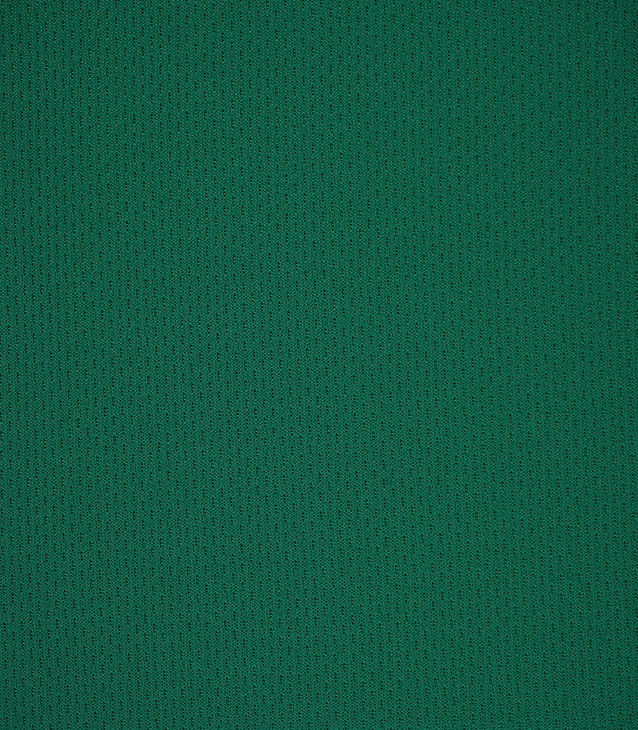
Weft knitting interlocks yarns horizontally in a course-by-course structure, producing fabrics with natural stretch in all directions. The loop geometry of weft knits gives them inherent elasticity that makes them the default construction for body-conforming activewear: leggings, sports bras, fitted training tops, and compression garments. Weft knitted fabrics also lend themselves to structural variety — mesh constructions with open, breathable apertures, scuba fabrics with dense double-knit structure, and interlock fabrics with smooth two-sided surfaces are all produced on circular weft knitting machines. Our weft knitted mesh fabric for breathable activewear is a direct application of this construction principle: the open mesh structure maximizes airflow through ventilation panels in training tops, jerseys, and footwear uppers.
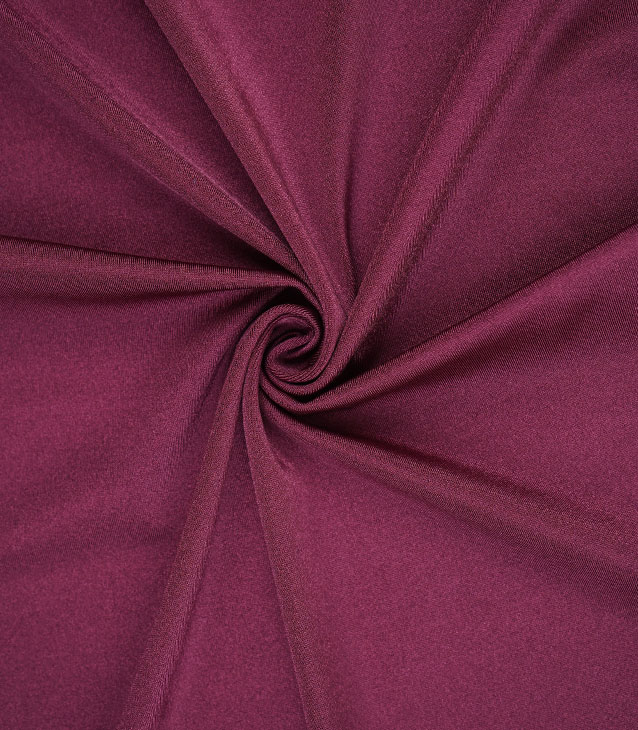
Warp knitting runs yarns longitudinally through the fabric, producing a more dimensionally stable structure with less inherent stretch than weft knits but superior resistance to runs, tears, and distortion under load. Warp knitted fabrics tend to have a smoother, more uniform surface and excellent resistance to snagging — properties that make them well-suited for swimwear, outerwear, and technical sportswear applications where fabric integrity under stress is paramount. Warp knitting also enables specialized surface effects: the mercerized cloth, loop velvet, and poly bright fabrics in Qida's warp knit range achieve surface aesthetics that weft knitting cannot replicate.
For activewear buyers and product developers, the practical implication is straightforward: specify weft knit constructions for garments requiring maximum body conformance and four-way stretch, and warp knit constructions for garments requiring dimensional stability, surface durability, or specialized textures. Many performance garments combine both — a weft knitted compression body with warp knitted mesh panels or a warp knitted outer shell with a weft knitted fleece lining.
Swimwear fabric operates under conditions that standard activewear fabric is not designed to tolerate. Pool water contains chlorine — a chemical that functions as a dilute bleach, attacking elastane molecules and oxidizing dyes. Saltwater leaves abrasive salt crystals in fabric fibers when it dries. Prolonged UV exposure degrades both fiber strength and color. A swimwear fabric that performs well in these conditions for a full competitive season demands a fundamentally different specification than a gym legging fabric that sees water only in the washing machine.
Chlorine resistance is the most technically demanding requirement. Standard spandex begins losing elasticity after sustained chlorine exposure as the chemical breaks the molecular chains responsible for stretch and recovery — a fabric can lose over half its tensile strength after several hundred hours in chlorinated water if the elastane is not engineered for pool use. Two approaches address this: using polyester as the primary fiber (polyester molecules are inherently more resistant to chlorine attack than nylon) or specifying chlorine-resistant elastane variants that are chemically modified to slow degradation. For competitive swimwear and training suits subjected to daily pool use, polyester-spandex fabrics with chlorine-resistant elastane represent the technical standard. Our warp knitted swimsuit cloth for performance swimwear is produced in polyester-spandex constructions that balance chlorine durability with the four-way stretch and shape retention required for a racing or training fit.
UV protection is the second critical swimwear specification. A fabric's UPF (Ultraviolet Protection Factor) rating indicates how much UV radiation passes through it — UPF 50+ means only 2% of UV reaches the skin. Swimwear worn outdoors for extended periods, including rash guards, surf suits, and beachwear, should meet UPF 50+ as a baseline. Tightly knitted structures with high fabric density naturally block more UV; fabrics engineered specifically for outdoor swimwear often add UV-absorbing fiber treatments to achieve the rating reliably across the full garment lifetime.
Stretch and recovery under wet conditions rounds out the swimwear specification. A fabric that fits and performs dry but sags, bags, or loses opacity when wet fails in its primary use context. High-quality swimwear fabrics maintain their stretch percentage, opacity, and dimensional stability in water — properties that depend on both fiber selection and knit construction tightness.
The ideal activewear fabric is not universal — it is defined by the specific demands of the activity and the environment in which it is performed.
Yoga and Pilates demand maximum four-way stretch, opacity under tension, and a soft tactile surface that does not irritate skin during floor-contact poses. Nylon-spandex or polyester-spandex weft knits at 200–280 GSM with 20–25% elastane content are the standard specification. Squat-proof opacity testing is a non-negotiable quality checkpoint for this category.
Running prioritizes lightweight construction, aggressive moisture wicking, and minimal wind resistance. Fabrics in the 100–180 GSM range with tight weft knit structures and moisture-transport finishes are typical. Mesh panels integrated into the back, underarm, and side zones dramatically improve ventilation during high-intensity effort.
Swimming requires chlorine-resistant, UPF-rated warp knit fabrics as described above. The construction needs to minimize hydrodynamic drag — smooth, tight surfaces with no raised textures or loose loops — while maintaining compression fit throughout the training session.
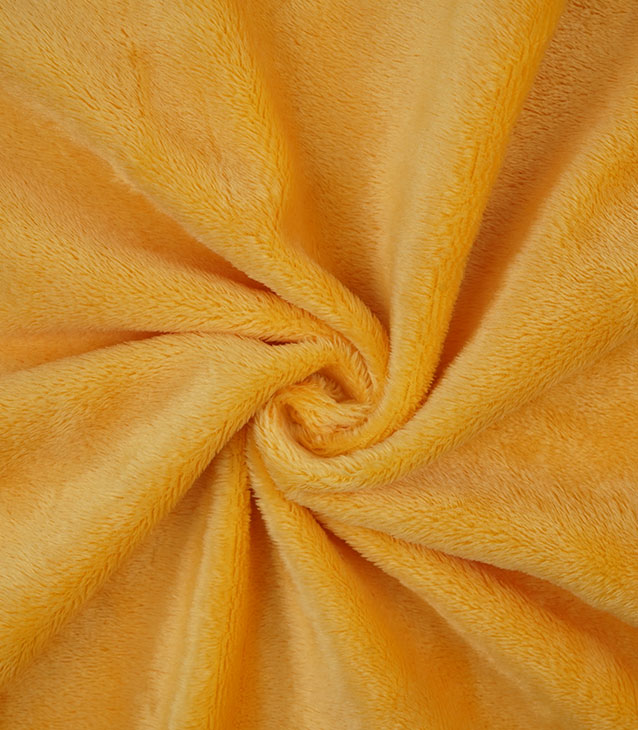
Outdoor sports and cold-weather training call for fabrics with thermal retention alongside moisture management — a combination that polar fleece constructions deliver effectively. Our warp knitted polar fleece fabric for outdoor sportswear provides the soft, plush insulation layer used in training jackets, base layers, and outdoor mid-layers, with the dimensional stability of warp knit construction maintaining its shape under pack pressure and repeated wear.
High-intensity training and gym wear balance compression support, moisture management, and durability against equipment friction. Polyester-spandex interlock or scuba constructions at 200–260 GSM offer the structural stability that supports heavy lifts and resists distortion through dynamic movement patterns.
Sourcing activewear or swimwear fabric at wholesale scale requires translating performance requirements into concrete, measurable specifications that a manufacturer can produce consistently across production runs. Vague briefs produce inconsistent results; precise specifications protect both product quality and the buyer-supplier relationship.
The core specification parameters to define upfront are fabric weight (GSM), which directly affects hand feel, opacity, and garment cost; fiber content and blend ratio, which determines the performance profile described above; stretch percentage and elastic recovery rate, typically measured in both warp and weft directions under a defined load; and construction type (warp or weft knit, and specific construction such as interlock, mesh, or scuba). For swimwear, add chlorine resistance test protocol and UPF rating requirement.
Certifications are increasingly a commercial requirement rather than a differentiator. OEKO-TEX Standard 100 certifies that the fabric contains no harmful substances at levels that pose a health risk — a baseline requirement for most European and North American retail buyers. GRS (Global Recycled Standard) certification validates recycled fiber content claims for brands marketing sustainability credentials. Confirm which certifications are required by your end retail channel before finalizing fabric selection, as certification status affects supplier eligibility and may affect lead times.
Finally, customization scope should be agreed in advance. Custom colorways, proprietary finishes (moisture-wicking treatments, anti-odor finishes, UV coatings), and custom GSM adjustments all require development lead time that must be built into the production schedule. Working with a manufacturer that offers dedicated technical development capability — rather than one that only sells from a fixed stock range — gives brands the flexibility to build genuine product differentiation into their fabric specifications. Qida's custom activewear fabric from Qida Textile covers both weft and warp knit constructions across the full performance fabric range, with in-house development capability to match fabric specifications to each brand's unique requirements.

27th floor , South building, 1358# Mingzhu North Road, Changxing County Zhejiang province, China

+86-13665757726

+86-0572-6228207

+86-0572-6228207


Copyright © ZHEJIANG QIDA TEXTILE CO., LTD. Rights Reserved. Activewear Fabric Suppliers Sportswear Fabric Manufacturers



 English
 中文简体
中文简体