Home / News / Industry news / Weft Knit Mesh Fabric: Structure, Performance & Sportswear Applications Guide
2026-06-08
Content
Mesh fabric is not a single category — it's a range of constructions produced by two fundamentally different knitting methods, and understanding the difference matters for anyone specifying fabric for performance apparel. The two primary methods are warp knitting and weft knitting, and they produce mesh with noticeably different mechanical behavior.
In warp knitting, yarns run vertically through the fabric structure in parallel, interlocking diagonally to form stable, dimensionally firm mesh. Warp-knit mesh resists distortion and holds its shape well under tension in a single direction, which makes it a common choice for applications where dimensional stability is the priority — mesh linings, structured panels, and team uniform fabric where the hole pattern must remain consistent under repeated mechanical stress.
Weft knit mesh is produced differently. A single yarn travels horizontally across the fabric width, forming interlocking loops in sequence on circular knitting machines. The loop-based horizontal construction gives weft knit mesh its defining property: uniform four-way stretch. Because the loops can extend in both the length and width directions and recover elastically, weft knit mesh moves with the wearer rather than resisting them. This is the property that makes it the preferred construction for form-fitting activewear, where the fabric needs to accommodate a full range of body movement without creating tension or restriction at any point in the motion arc.
The practical implication for apparel designers is straightforward: where warp knit mesh holds a fixed shape, weft knit mesh adapts to body geometry. For sportswear, activewear, and performance outerwear where freedom of movement is a core design requirement, the weft knit construction is the functionally appropriate starting point.
The breathability of mesh fabric comes directly from its open-knit structure — the deliberately engineered gaps between yarn loops that allow air to pass freely through the fabric plane. In conventional solid knit fabrics, the interlocked loops sit close together, creating a surface that traps body heat and restricts airflow. In open-knit mesh, the loop geometry is designed to leave visible apertures, and it is through these apertures that thermal regulation happens.
During physical activity, the body generates heat and moisture at the skin surface. In a breathable mesh garment, warm humid air escapes outward through the apertures while cooler ambient air enters. This convective exchange is continuous and passive — it requires no mechanical assistance and performs consistently regardless of activity intensity. The result is a garment that actively participates in thermoregulation rather than simply sitting between the body and the environment.
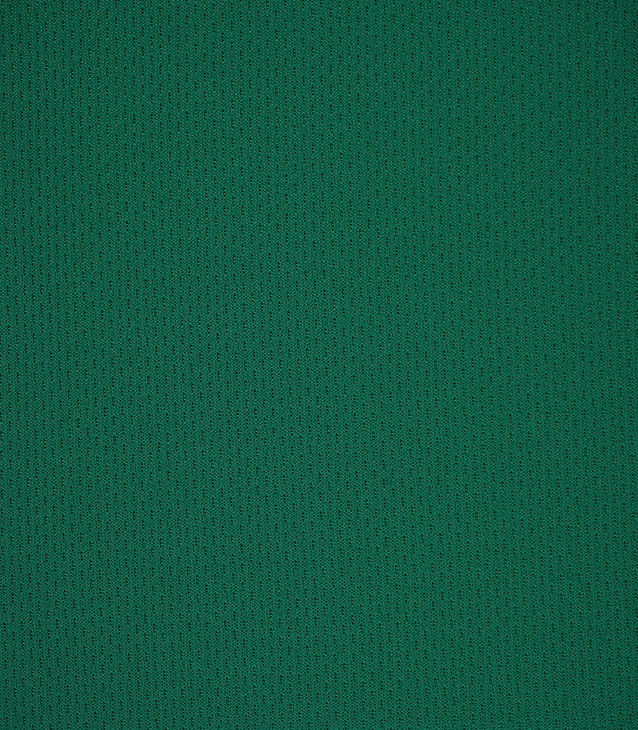
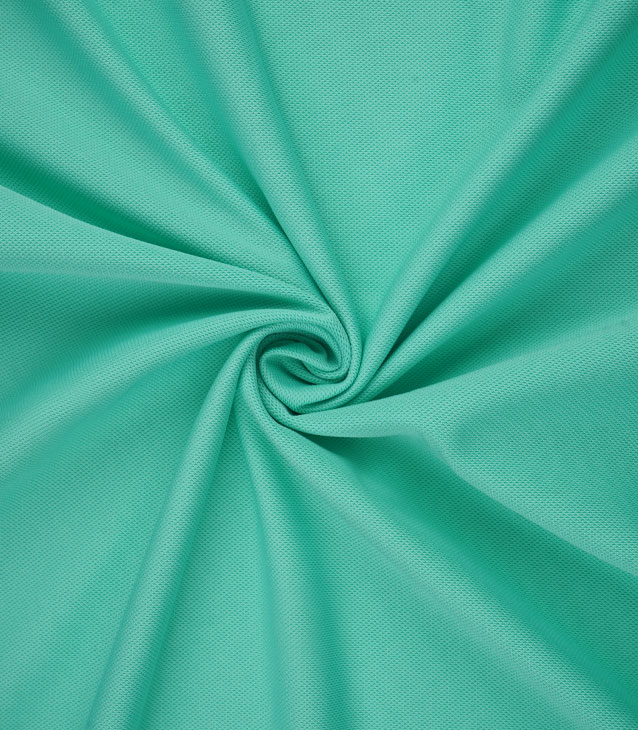
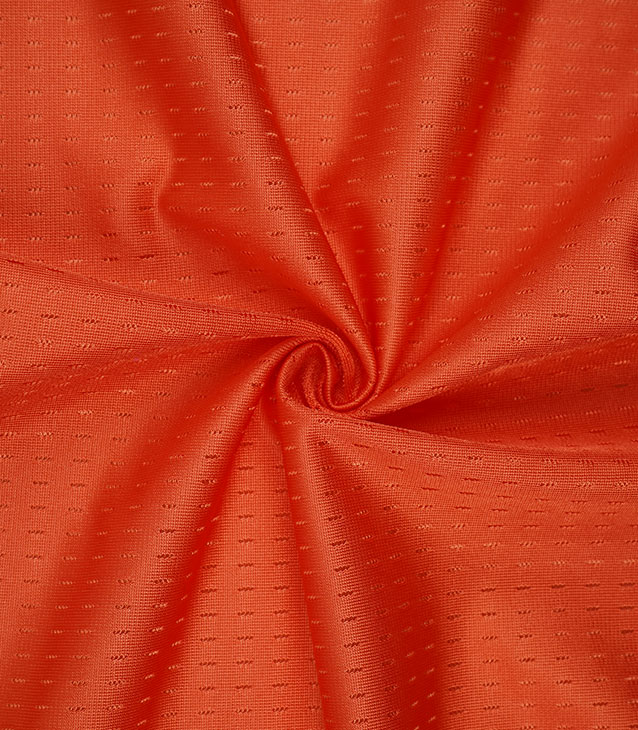
Within the weft knit mesh category, different open-knit pattern geometries produce different aperture shapes and densities, each with specific performance and aesthetic characteristics. Bird-eye mesh (also called eyelet mesh) features a regular pattern of small circular apertures evenly distributed across the fabric surface. The uniform hole distribution creates consistent breathability across the entire garment panel and a clean, symmetric visual texture. Grid mesh uses a rectangular or square aperture pattern with straighter sight lines, giving a more structured visual character suited to technical and outerwear applications. Pineapple grid mesh introduces a more complex aperture geometry with diagonal elements, creating a fabric with both visual interest and controlled airflow distribution.
All of these pattern variants are available in Qida's weft knitted mesh fabric in multiple open-knit patterns, allowing buyers to specify the aperture geometry that best matches their garment's functional and aesthetic requirements. Aperture size, density, and shape can also be customized in OEM production runs to meet precise performance specifications.
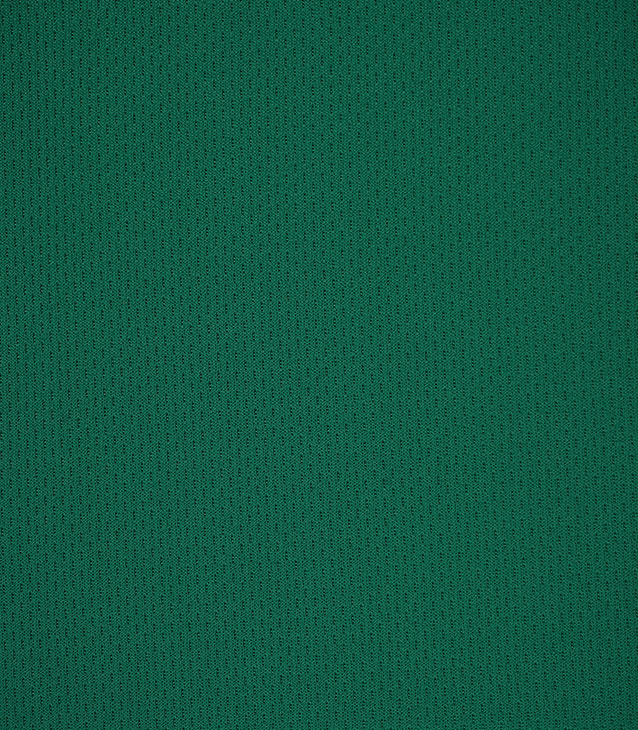
The performance profile of weft knit mesh fabric across three dimensions — stretch and recovery, moisture management, and shape retention — determines whether it is the right material for a given application. Each property is a direct consequence of construction decisions made at the yarn and knitting stage.
Stretch and recovery in weft knit mesh is governed primarily by two factors: the loop structure of the weft knit construction and the presence or proportion of elastane (spandex) in the yarn blend. Pure polyester weft knit mesh offers inherent two-way stretch from its loop architecture. Adding elastane — typically at 5–15% of yarn weight for activewear applications — introduces elastic recovery force, meaning the fabric actively returns to its original dimensions after being stretched. This recovery property is what maintains the fit of a garment through repeated wear and washing cycles without permanent distortion. Four-way stretch weft knit mesh, produced on circular knitting machines with elastane content, extends and recovers uniformly in both length and width, which is the correct specification for close-fitting athletic garments across all body regions.
Moisture management in weft knit mesh operates through two simultaneous mechanisms. First, the synthetic fiber surface — typically polyester or nylon — is hydrophobic: it does not absorb water into the fiber core but instead allows moisture to travel along the fiber surface through capillary action. Sweat produced at the skin migrates along the yarn to the fabric's outer surface. Second, the open-knit apertures accelerate evaporation by exposing a larger surface area to moving air. The combination of fiber-level wicking and structural ventilation produces a quick-drying performance that solid knit fabrics of equivalent fiber content cannot match. For high-intensity activewear where sustained moisture on the skin causes both comfort problems and temperature regulation failure, this dual-mechanism moisture management is a functional requirement rather than a marketing claim.
Shape retention — the ability of the fabric to maintain its dimensional profile through the stress of active use and repeated laundering — is primarily determined by yarn quality and knitting machine tension consistency. In weft knit mesh, the loop structure can be engineered to resist permanent elongation under the loads typical of active movement. High-density foam in garment seat panels and fine-texture mesh in body-contact zones both rely on the base fabric maintaining its specified dimensions over time. A mesh that permanently stretches out after several washes loses the fit precision that activewear requires and creates the visible bagging that signals poor quality to end consumers.
Weft knit mesh fabric serves different functions depending on where in a garment it is used and what performance demands the end application places on it. Understanding the application-specific requirements helps in selecting the correct mesh weight, aperture density, and fiber specification for each use case.
Sportswear — including team jerseys, training tops, and competition shorts — is the highest-demand context for mesh breathability. In these garments, mesh is often used for full-body panels or as insert panels at high-heat zones: underarms, back yoke, and side panels. The aperture size in sportswear mesh is typically larger than in fashion applications, prioritizing maximum airflow over tactile smoothness. Polyester-spandex weft knit mesh in a bird-eye or grid pattern at 120–160 GSM is a common specification for this segment, balancing opacity, stretch, and ventilation. The weft knitted fabric collection for sportswear and activewear covers the weight and pattern range required for both full-panel and insert applications.
Activewear — yoga wear, gym sets, running apparel, and lifestyle athletic wear — places different demands on mesh. Here, the fabric must balance breathability with aesthetic quality: the mesh needs to look refined and feel soft against the skin, while still providing the functional ventilation and moisture management that performance buyers expect. Finer aperture patterns, higher elastane content for compression, and smoother yarn surfaces are typical specifications for this segment. The tactile experience matters as much as the technical performance, which drives demand for mesh constructions with a softer hand feel than traditional sportswear mesh.
Outerwear uses weft knit mesh primarily as a lining or interlayer material rather than as an outer shell. As a lining, mesh contributes breathability to a garment system that might otherwise trap heat between an outer shell and the body. The mesh lining creates a micro air channel that allows thermal exchange and moisture transport even when the outer shell is non-breathable. Lightweight mesh at 80–120 GSM in a fine grid or bird-eye pattern is the typical specification for outerwear lining applications, where the visual contribution is secondary to functional performance and the fabric must be smooth enough not to create friction against inner layers during movement.
For brands, garment manufacturers, and distributors sourcing weft knit mesh fabric at volume, supplier evaluation requires looking beyond basic fabric specifications to assess consistency, customization capability, and the production infrastructure that supports reliable large-scale delivery.
Fabric weight and fiber specification are the starting parameters for any sourcing conversation. GSM (grams per square meter) determines the fabric's opacity, hand feel, and relative weight in the finished garment. Fiber composition — polyester-only, polyester-spandex blend, or nylon-spandex — determines the stretch profile, dyeing behavior, and moisture management performance. Buyers should request physical samples at the target GSM and composition rather than relying on digital color references or weight approximations, as these variables interact in ways that are only fully apparent in a physical sample.
Customization scope is a differentiating factor between manufacturers. The ability to specify aperture pattern geometry, yarn count, elastane percentage, fabric width, and color within a single production run — rather than selecting from a fixed stock catalogue — significantly expands the design options available to brands building distinctive product lines. OEM-capable manufacturers can accommodate these variables within standard production workflows; suppliers limited to fixed stock programs cannot.
Certifications increasingly determine market access, particularly for European and North American buyers. OEKO-TEX Standard 100 certification confirms that the fabric has been tested against a comprehensive list of harmful substances and meets human-ecology safety requirements. GRS (Global Recycled Standard) certification covers recycled fiber content claims for brands with sustainability commitments. Reviewing a supplier's current fabric certifications and quality standards before placing orders is standard practice for buyers whose end markets require documented compliance.
Zhejiang Qida Textile Co., Ltd. has operated as a fabric manufacturer since 1998, with production infrastructure that includes 100 circular knitting machines dedicated to weft knit fabric production alongside Karl Mayer warp knitting equipment for broader fabric range coverage. Annual output exceeds 30,000 tons, providing the production volume and schedule consistency that wholesale buyers require for seasonal programs. Qida's textile manufacturing capabilities support custom weft knit mesh specifications across weight, pattern, fiber content, and color, with export experience serving buyers in India, Brazil, Mexico, Italy, Poland, and other markets where performance fabric demand continues to grow. Fabric development for new specifications is handled by an in-house technical team, allowing buyers to move from specification to confirmed sample without involving a third-party development intermediary.

27th floor , South building, 1358# Mingzhu North Road, Changxing County Zhejiang province, China

+86-13665757726

+86-0572-6228207

+86-0572-6228207


Copyright © ZHEJIANG QIDA TEXTILE CO., LTD. Rights Reserved. Activewear Fabric Suppliers Sportswear Fabric Manufacturers



 English
 中文简体
中文简体