Home / News / Industry news / Digital Textile Printing Market: A Fabric Mill's View on Growth and Print-Ready Knits

2026-11-23
Digital textile printing has grown up. It is no longer just a way to make a few sample metres look good in a showroom; it is now a production route for short runs, fast collections, and more localized supply. The published forecasts for the digital textile printing market tell a consistent story even when the numbers disagree: print is taking share where speed, design variety, and lower inventory matter. From our side of the supply chain, the interesting part is not the headline figure. It is what those figures ask of the fabric itself.
Content
Anyone shopping for a market number will find a wide spread. Some summaries put the global market at roughly USD 3 billion in 2025; others place it closer to USD 7.5 billion for 2026. Forecasts for the early 2030s range from about USD 6 billion to more than USD 21 billion. That is not a reason to ignore the data. It is a reason to read the definitions.
| Indicator | Illustrative published range |
|---|---|
| Market size, 2025–2026 | About USD 3.1–7.5 billion |
| Forecast value, 2030–2036 | About USD 7.9–21.1 billion |
| Reported CAGR | About 10.8%–14.8% |
| Printed textile volume, 2022–2028 | 3.3 to 5.5 billion square metres |
The common thread is direction, not decimal places. Digital printing is growing because brands and retailers want smaller orders, faster replenishment, and more design changes per season. On-demand production reduces unsold stock. Nearshoring and supply-chain compliance add another push. Polyester fibre growth supports dye-sublimation demand, and technical textiles are opening new uses beyond fashion and home décor.
The restraints are just as real. Industrial digital lines carry high capital cost, ink remains expensive per metre, and energy prices can move quickly. Chemical compliance, including PFAS restrictions, adds testing and reformulation work. Printhead supply is concentrated. These are not minor details. They decide whether a print line runs three shifts or sits idle, and they explain why digital printing is growing quickly without replacing conventional methods everywhere.
Digital printing gets the attention, but the fabric decides whether production runs smoothly. A printer can compensate for some issues; it cannot make an unstable knit behave. We look at dimensional stability, shrinkage, face-side consistency, winding tension, and pre-treatment compatibility before a fabric is called print-ready. A perfect colour profile means little if the substrate shifts after washing or the surface shows a crease line.
This is especially true for knits. Warp-knitted fabrics can offer a stable structure for activewear and fashion, while weft knits bring stretch and softness. Buyers comparing structures may find our guide on choosing weft-knitted fabric for fashion and activewear useful before they lock in a print method. The earlier the fabric and the print process are discussed together, the fewer surprises later.
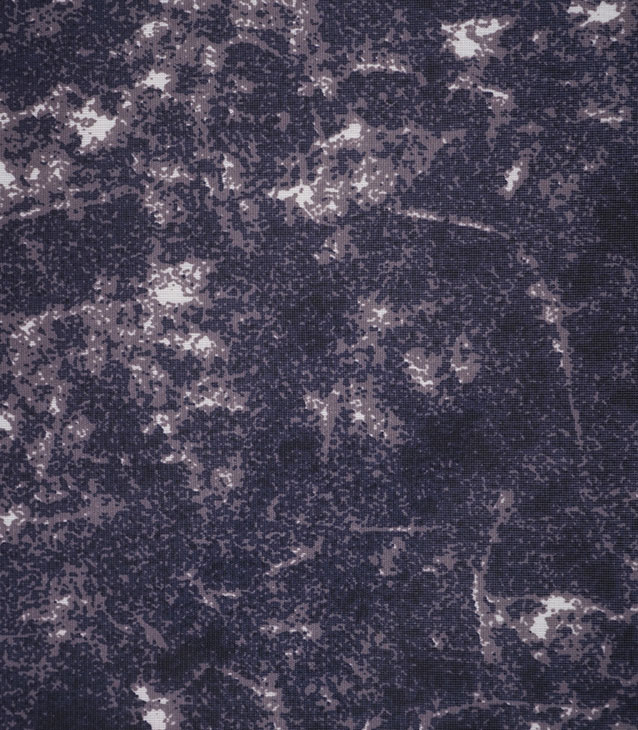 Printed Warp Knitted Polyester Fabric for Apparel and Home UseSmooth, stable warp-knitted polyester supports clear printed designs while staying lightweight, soft, and durable; supplied in rolls with customization for size, thickness, and design.View Product →
Sublimation works well on polyester and is common in sportswear, flags, and soft signage. Reactive inks suit cotton and viscose where a softer hand feel and good wash fastness matter. Acid inks are used on nylon, including many swimwear and lingerie fabrics. Pigment inks are more flexible across fibre types but can change the hand feel. Each route has its own pre-treatment, fixation, washing, and finishing needs.
Swimwear is a good example of why the brief must be complete. A fabric may print beautifully in the sample room and still fail in chlorinated water, under stretch, or after repeated rubbing. Colourfastness, elongation, recovery, and lining compatibility all need to be tested together. Our swimwear cloth range is developed with those end-use demands in mind, not just the look of the first print.
 Warp Knitted Swimwear Fabric for High-Performance SwimsuitsSoft, stretchy warp-knitted swimwear fabric with recovery and breathability, suited to chlorine and salt water; useful when testing colourfastness, elongation, and lining compatibility together.View Product →
Digital printing usually carries a higher cost per metre than rotary screen at long volumes. Ink, printheads, pre-treatment, and finishing all add cost. The payback comes from what happens before and after the printer: fewer screens, lower minimums, faster sampling, and less unsold stock. For a buyer, the practical question is not “is digital cheaper?” but “where is the break-even for this design, this fabric, and this delivery window?”
We have seen the same pattern across many enquiries: the first order is digital, the second order is a hybrid discussion. That is healthy. It means the print method is being chosen for the order rather than for the brochure.
Zhejiang Qida Textile has been designing, producing, and marketing fabrics since 1998. We operate as a fabric factory, not a print shop alone, and that shapes how we support a printed programme. Our factory runs warp knitting, circular knitting, and nonwoven lines, with annual capacity above 30,000 tonnes. That range lets us discuss the substrate, the print route, and the final garment or home-textile use in one conversation.
Warp-knitted mesh is one area where print and structure work well together. Mesh can carry colour, texture, and ventilation in activewear, linings, and sportswear, but the open surface demands careful ink control and a stable base. A print that looks sharp on paper can bleed or speckle on an open knit if the preparation is wrong.
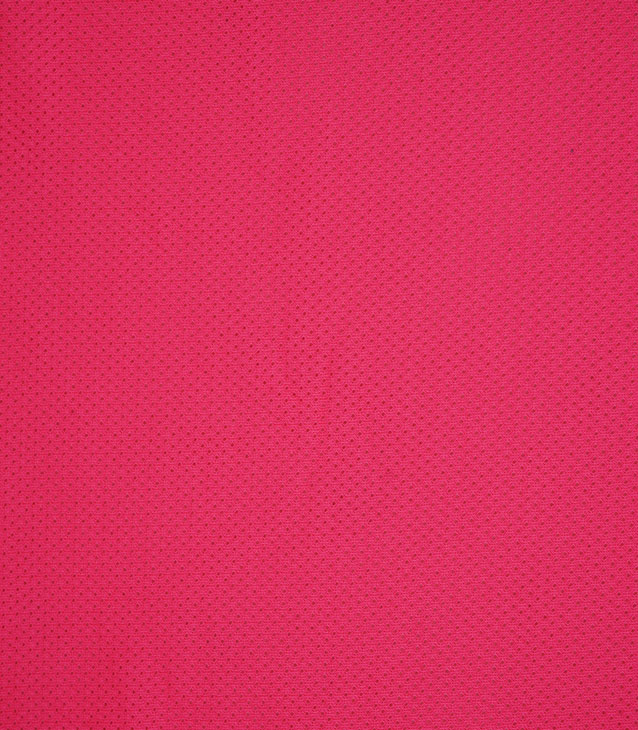 Warp Knitted Polyester Mesh for Sportswear and LiningsUniform, breathable polyester mesh offers dimensional stability and a smooth surface for activewear, linings, accessories; its open structure rewards careful print preparation and ink control.View Product →
We also work with weft knits such as interlock, mesh, and scuba-style fabrics. These are useful when softness, stretch, or a fuller hand feel matter more than the crisp stability of a warp knit. Digital printing does not remove the need to test shrinkage and recovery; it makes those tests more important because short runs leave less room for a second production correction.
We do not claim digital printing is right for every order. It is not. But when a buyer needs speed, design flexibility, and a lower inventory commitment, a print-ready fabric with consistent preparation is a better starting point than a beautiful greige roll with unresolved questions.
A clear brief saves weeks. These are the questions we find most useful at the sampling stage:
Ask for test reports, not adjectives. A printer’s colour chart is useful, but a washed, stretched, and measured fabric sample is more useful. The same applies to the base cloth: a specification sheet should describe the fabric that will actually be printed, not a best-case laboratory square.
Growth in digital textile printing is likely to continue, but it will not be uniform. Europe and North America are pushing on-demand production, nearshoring, and compliance. Asia-Pacific remains a large manufacturing base and a growing market for digital capacity. Technical textiles in automotive, medical, and protective applications could add volume that has little to do with fashion cycles.
Digital printing will take share where speed and flexibility matter. Rotary and screen will remain for long, stable runs. The mills that benefit will be the ones that treat print as a fabric engineering issue, not a finishing afterthought. That means stable substrates, honest test data, and a willingness to say when a print route is not suitable.
If you are planning a printed collection, send us the artwork, the end use, and the performance standard you need to meet. We will tell you what is realistic for the fabric, the print method, and the delivery date. That conversation is usually more valuable than another market forecast.

27th floor , South building, 1358# Mingzhu North Road, Changxing County Zhejiang province, China

+86-13665757726

+86-0572-6228207

+86-0572-6228207


Copyright © ZHEJIANG QIDA TEXTILE CO., LTD. Rights Reserved. Activewear Fabric Suppliers Sportswear Fabric Manufacturers


 English
 中文简体