Home / News / Industry news / Warp Knit Fabric: Types, Properties & Applications for Wholesale Buyers
2026-05-26
Content
Warp knitting and weft knitting are both loop-based construction methods, but they produce fundamentally different fabrics. In weft knitting, a single yarn travels horizontally across the fabric width, forming loops in sequence. In warp knitting, multiple yarns—one for each needle—run parallel along the fabric length and interlock in a zigzag or chain pattern simultaneously. Every needle knits at the same time, producing a complete course in one machine pass.
The structural consequence of this is significant: warp knit fabrics are run-resistant. Because each loop is locked by its own yarn rather than depending on a continuous thread running across the width, a broken yarn does not cause laddering. This is the defining mechanical difference that makes warp knits suitable for applications where weft knits would fail—swimwear panels, compression garments, performance outerwear, and technical textiles where structural integrity under repeated stress is non-negotiable.
From a production standpoint, warp knitting machines operate at exceptionally high speeds, making this construction efficient for large-volume runs. The fabric is produced at a constant, continuous width, and can be engineered for an extensive range of surface textures, pile heights, and opening structures depending on the machine type and bar configuration.
Warp knitting machines fall into two primary categories—tricot and raschel—and each produces a distinct family of fabrics with different performance profiles and end-use suitability.
| Property | Tricot | Raschel |
|---|---|---|
| Surface Character | Fine, smooth, vertical wales on face; crosswise ribs on back | Open, lace-like or textured; can feature inlaid heavier yarns |
| Elasticity | Moderate; excellent shape retention | Variable; higher elongation possible with spandex inlay |
| Construction Complexity | Simpler stitch options; high production speed | Complex patterns; flexible needle system for open structures |
| Typical Applications | Lingerie, sportswear, swimwear lining, outerwear lining, home textiles | Power mesh, compression panels, lace, netting, technical fabrics |
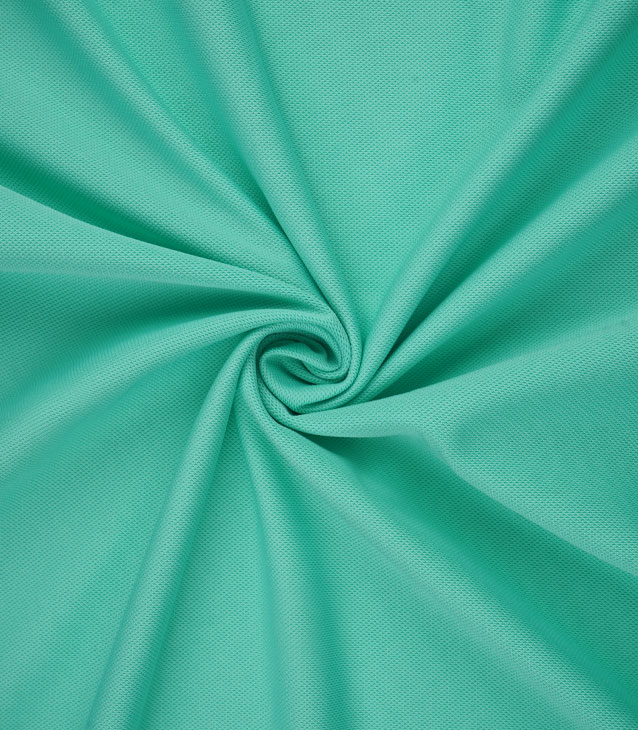
Tricot represents the largest volume category within warp knitting. Its smooth face, good drape, and reliable shape retention make it the standard construction for lingerie, activewear linings, and outerwear facings. At higher gauges with finer yarns, tricot produces lightweight, breathable fabrics that work well as base layers and swimwear underlays.
Raschel machines offer more needle flexibility, enabling the production of open-structure fabrics—power mesh, sports mesh, and lace—as well as complex technical constructions with specific porosity or compression requirements. For buyers sourcing fabrics for compression garments, athletic panels, or filtration applications, raschel constructions are typically the more appropriate specification. As knitting technology has matured, the lines between the two machine types have narrowed, with tricot machines becoming more versatile and raschel machines gaining speed.
Dimensional stability is the headline property of warp knit fabrics. Unlike weft knits, which tend to stretch significantly along both the length and width, warp knits maintain their dimensions under longitudinal stress—a critical requirement for garments that need to hold their shape across a season of active use. For buyers specifying swimwear, performance tops, or fitted outerwear, this translates directly to fewer fit complaints and longer product lifespan.
Run resistance is a closely related advantage. The locked-loop construction prevents a single snag from propagating across the fabric, which is why warp knits are specified for applications that would destroy the structural integrity of a weft-knit alternative—sports jerseys, medical compression wear, and automotive textile surfaces, for example.
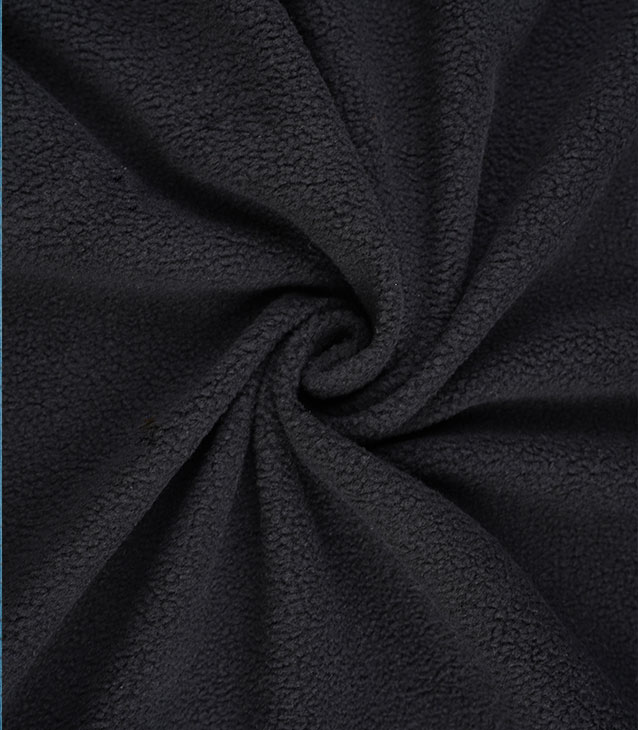
Surface engineering is another area where warp knits outperform alternatives. Depending on pile height, brushing treatment, and yarn type, warp knit constructions can range from smooth, glossy tricot to deeply brushed pile fabrics. The full warp-knitted fabric range for apparel and technical applications spans these surface options across different construction types. At the pile end of the range, fabrics such as super soft warp-knit fabric for plush apparel demonstrate how brushing and finishing transforms the same underlying knit construction into a radically different hand feel.
Production efficiency is a practical consideration that influences unit cost. Because all needles in a warp knitting machine operate simultaneously and yarn is fed from multiple beams, output speeds are substantially faster than comparable weft knitting operations. For buyers placing high-volume orders, this efficiency translates to shorter lead times and more competitive fabric pricing at scale.
Warp knit fabric's combination of dimensional stability, surface versatility, and run resistance makes it the preferred construction across several distinct product categories:
The choice between warp and weft knit is not a question of which construction is superior—it is a question of which construction fits the end-use specification. Weft knits dominate casual and fashion apparel because their high stretch and soft drape are exactly what those products require. Warp knits dominate performance, technical, and precision-fit applications because stability, run resistance, and surface consistency are the primary requirements.
A practical frame for making this decision:
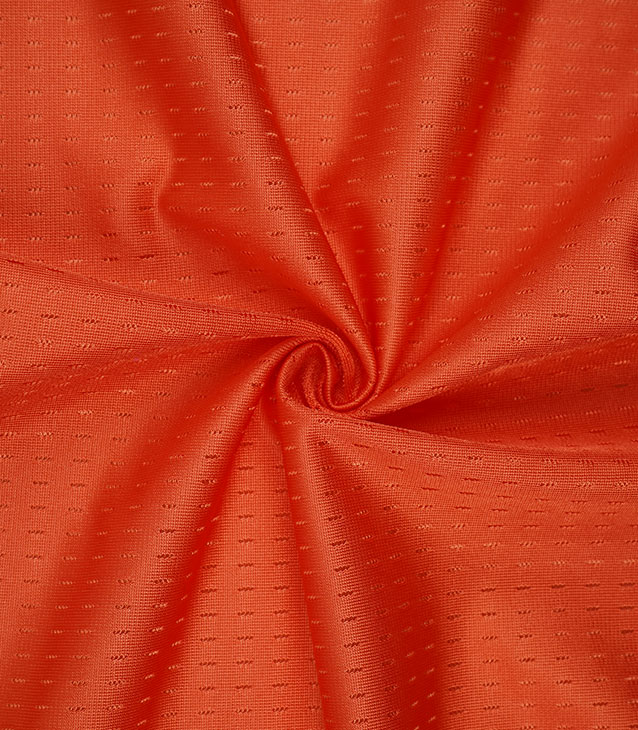
For mixed-application product lines—where some styles require stability and others require stretch—carrying both construction types in the supplier mix, rather than defaulting to a single fabric family, gives designers the flexibility to match the right construction to each product requirement. Exploring options such as mesh dazzle warp-knit fabric for fashion and performance panels alongside softer weft-knit constructions illustrates how a broad fabric portfolio supports this approach.
Warp knit fabrics are sold across a wide quality range, and the structural sophistication of the construction makes visual inspection at the sample stage insufficient for full quality assessment. A thorough sourcing checklist should address the following:
Finally, confirm that your supplier can document the machine specifications used for production. Warp knit fabrics from different machine configurations—even at similar GSM—can behave very differently in cut-and-sew operations and in end-use performance. Traceability to machine type and bar configuration is the kind of specification detail that separates reliable fabric suppliers from commodity vendors.

27th floor , South building, 1358# Mingzhu North Road, Changxing County Zhejiang province, China

+86-13665757726

+86-0572-6228207

+86-0572-6228207


Copyright © ZHEJIANG QIDA TEXTILE CO., LTD. Rights Reserved. Activewear Fabric Suppliers Sportswear Fabric Manufacturers



 English
 中文简体
中文简体